


Keep a small finish record
Save the collection and colour code, batch details, application date and the products used underneath or over the decorative layer. Keep a photograph of the packaging. If someone else applied the finish, ask them to write down the care method and any restrictions at handover.
Store any retained material according to the manufacturer’s instructions. Label it with the room and product reference. A bag marked ‘leftovers’ is much less useful two years later than one that tells you exactly which wall it belongs to.
Choose care by the coating system
Do not assume that every liquid wallpaper surface can be scrubbed, steamed or wet-wiped. A protective topcoat, if one has been used, changes the system and may change the approved cleaning and repair methods. Ask for guidance covering the finished wall, not just the underlying decorative product.
For routine upkeep, start with the least aggressive method permitted by those instructions. Try it discreetly before treating a visible area. If particles loosen, colour transfers or the texture changes, stop rather than applying more pressure.
- Check the approved method before adding water or cleaning products.
- Avoid experimenting with solvents, abrasive pads or steam.
- Protect contact points by adjusting furniture position where practical.
- Address a new mark carefully rather than repeatedly treating the same patch.
Work out whether the problem is on the wall or in it
A surface scuff, a chipped area and a stain appearing from underneath are different problems. Photograph the area in even light and from an angle, note when it appeared and describe any recent leak, impact or cleaning attempt.
Recurring staining or dampness needs its cause resolved before cosmetic work. Covering the same patch again may hide evidence temporarily without improving the result. When the cause is unclear, ask for an assessment instead of guessing from the colour of the stain.
Plan a local repair before starting one
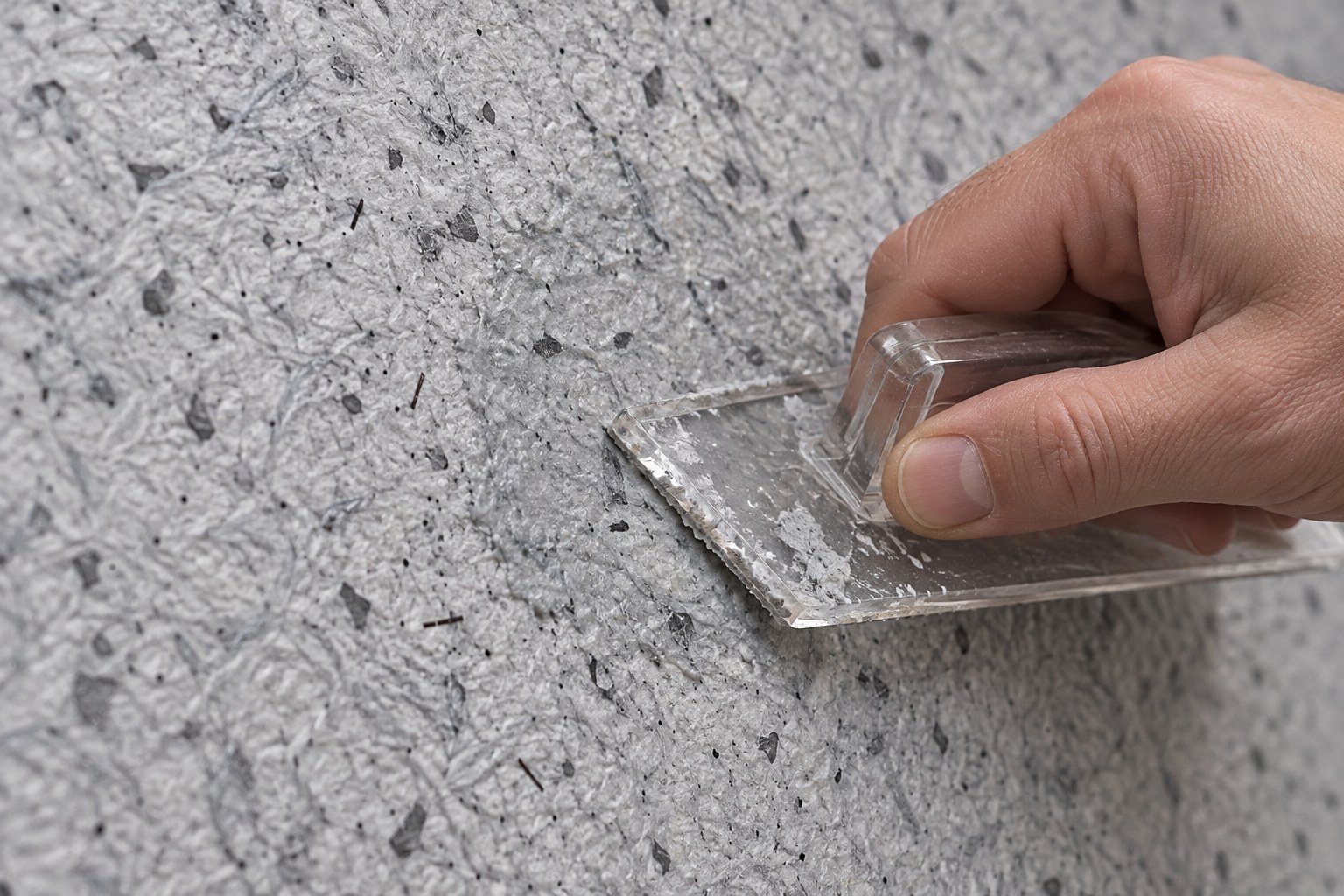
AVRORA’s guidance describes retaining material for small repairs. That is a useful option, but it is not a guarantee that every patch will disappear. Age, light exposure, dirt, material differences and application technique can all affect how the repaired area compares with the surrounding wall.
Confirm that the existing system supports the proposed repair method, particularly if a topcoat is present. Ask about the area to treat, preparation and drying before disturbing the surface. Keep the work small and controlled, and assess it only after it has dried as instructed.
What to send when asking for repair advice
Send an overall view of the wall, a close-up of the damage, the product reference and any known topcoat details. Explain the size of the area and what has already been tried. Mention whether matching material is available.
Agree on the realistic aim: restoring a tidy, serviceable surface may be possible even when an invisible patch cannot be promised. For a highly visible wall, ask whether a test repair or work to a natural boundary would give a more predictable appearance.
- Product, colour and batch information, if available.
- Photos showing the whole wall and the affected area.
- The likely cause and any earlier treatment.
- Details of retained material and the desired visual result.
Manufacturer guidance
AVRORA guidance on retaining material for repairs (Russian)Find the finish that fits your project
Explore AVRORA collections or tell us about your room. We can help clarify the product, preparation and quantity before you order.
