


Start with what you are keeping
Put the floor, doors, large furniture and fixed joinery ahead of accessories in the decision. A cushion is easy to replace; a floor usually is not. Photographing these elements helps you remember them, but use the real materials when judging a sample.
Describe the relationship you want. Should the wall sit quietly behind the furniture, make timber feel warmer or give a pale room more definition? That one sentence will keep the shortlist focused when attractive but unrelated options appear.
Separate colour from texture
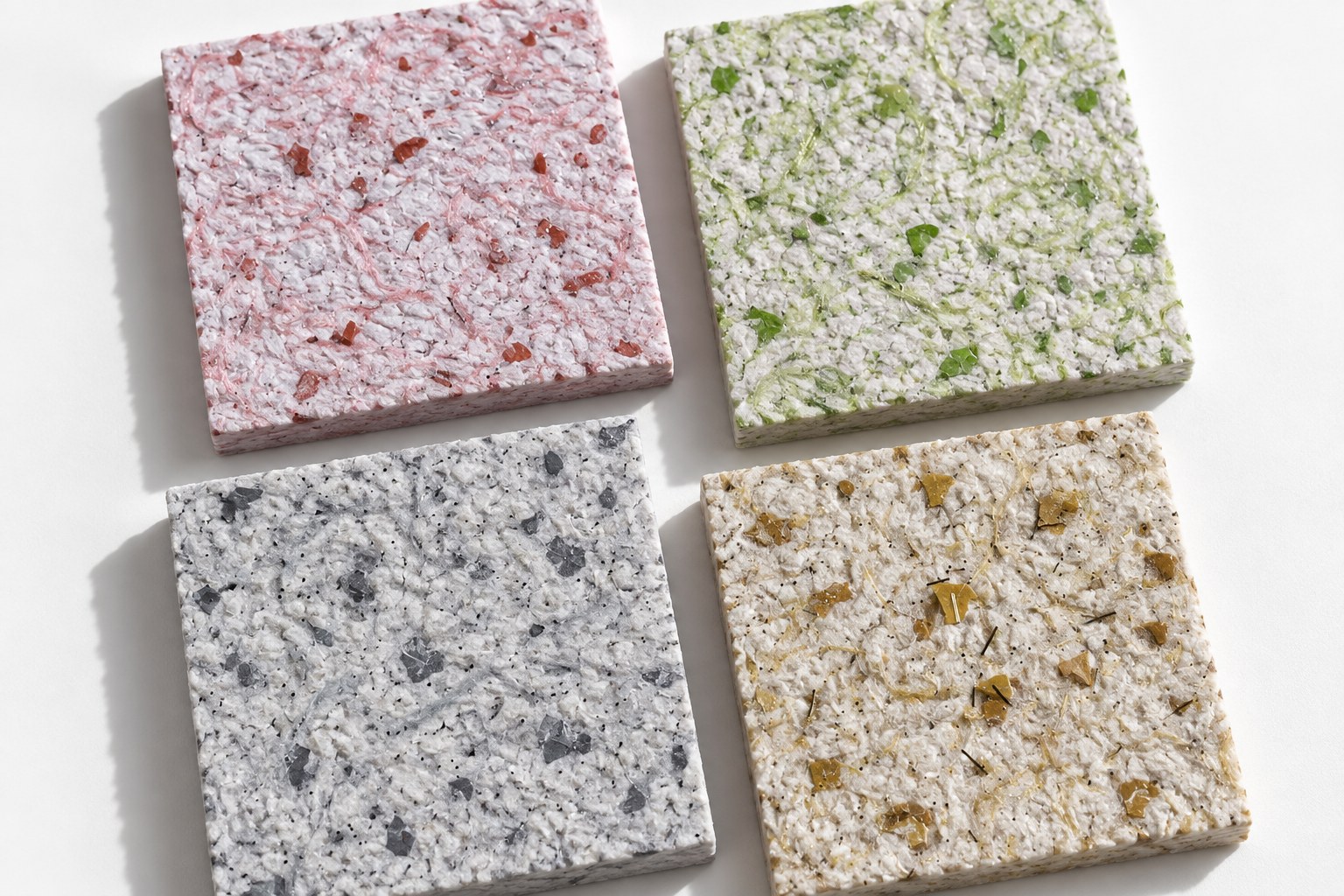
Two finishes in a similar shade can have very different presence. Look at the scale of the fibres or particles, their contrast with the background and the amount of reflective detail. A sample that looks lively close up may read as a calm surface across the room, or the reverse.
Judge it at two distances: close enough to see the material, then from where you normally sit or enter. Do not make the decision entirely at arm’s length. The wall is part of the room’s composition, not a small object you will hold in your hand.
Run a simple two-light comparison
Place the shortlisted samples upright against the intended wall. Compare them in daylight without relying on a camera to decide the colour. Repeat after dark with the lamps that will remain in the room. If those lamps are being replaced, choose them before the final finish approval.
Move a sample to the neighbouring wall as well. A surface facing a window and one beside it receive light differently. Note which option still feels right in both conditions, rather than choosing the one that wins for ten minutes in the best light.
- Compare samples in the same position, not at opposite ends of the room.
- Keep the floor or a fixed furniture surface in view.
- Look for an unwanted pink, green, yellow or grey cast beside those materials.
- Record observations in words; phone photos are reminders, not colour standards.
Use an accent wall with a clear purpose
A stronger texture or shade works best when it supports something already important: a seating area, a headboard or a well-proportioned recess. Choose the wall because of its role in the room, not because it is the only one left undecided.
For a busy interior, try a quieter finish first. For a restrained interior, test whether the extra texture provides the depth you want. Neither rule is universal; the sample and the surrounding materials should settle the question.
Approve a result that someone can reproduce
Once you choose, record the collection, colour code and approved sample. If an installer prepares a test panel, retain it until the project is finished. Agree the lighting conditions used to assess the work, especially where wall lights emphasise texture.
Keep the purchase decision separate from marketing names. ‘Warm white’ and ‘stone grey’ can mean different things across collections. A precise reference and a physical sample give the supplier, installer and homeowner a shared target.
Find the finish that fits your project
Explore AVRORA collections or tell us about your room. We can help clarify the product, preparation and quantity before you order.
